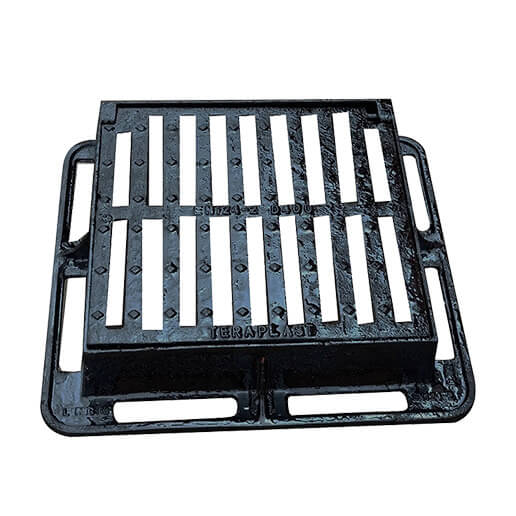
 GULLY GRATING
Gully Grating Types and Dimensions for Road Drainage Projects
Gully grating dimensions should be selected based on the clear opening, frame outer size, frame depth, load class, drainage channel, traffic condition, and maintenance access required for the project.
For road drainage and stormwater applications, buyers should not choose a gully grating only by the clear opening size. The frame size, installation pit, D400 load requirement, drainage capacity, and technical drawing should also be confirmed before ordering.
Quick Answer: What Are Common Gully Grating Dimensions?
Gully grating dimensions usually refer to two key measurements: clear opening size and frame outer size. The clear opening affects water intake, while the frame outer size affects installation. Buyers should confirm both dimensions before preparing the installation pit or placing an order.
For road and parking area applications, D400 gully grating dimensions may also require confirmation of frame depth, approximate weight, load class, and technical drawings. All dimensions in this guide are for general reference only. Final specifications should be confirmed by technical drawings, project requirements, and supplier documents.
Standard Gully Grating Dimensions and Sizes
Clear Opening vs Frame Size
The clear opening is the effective water intake area of the grating. The frame size is the outer dimension of the frame used for installation. In road drainage projects, the installation pit should be prepared according to the frame outer size, not only the clear opening.
In our experience, confusing clear opening with frame outer size is one of the most common specification mistakes in road drainage projects. A grating may have the correct water intake area, but if the frame size or frame depth does not match the installation pit, the product may not fit correctly on site.
The following dimensions are general reference sizes only. Actual frame size, depth, and weight should be confirmed by technical drawings before ordering.
| Clear Opening | Typical Application | Common Load Class | Buyer Should Confirm |
|---|---|---|---|
| 300 × 150 mm | Sidewalks, light drainage points | B125 / C250 | Frame outer size, frame depth, drawing |
| 400 × 200 mm | Roadside drainage, urban roads | C250 / D400 | Frame size, load class, drainage requirement |
| 500 × 250 mm | Main roads, parking areas | D400 | Drawing, weight, frame depth, coating |
| 600 × 300 mm | High-flow roads, industrial areas | D400 / E600 | Load class, frame depth, installation method |
| 300 × 300 mm | Squares, parking areas | B125 / D400 | Frame design, drainage capacity, project drawing |
For example, a clear opening of 400 × 200 mm may require a larger frame outer size. The exact frame dimension should always be confirmed from the technical drawing before production or installation.
Main Types of Gully Grating
Different gully grating types can affect surface water intake, maintenance access, anti-theft performance, frame stability, and installation requirements. The right type should be selected according to the load class, drainage demand, maintenance frequency, and project environment.
Flat Bar Gully Grating
Flat bar gully gratings use a parallel bar structure. They are commonly used for roadside drainage and standard urban road drainage areas. The open area depends on bar spacing and product design, so buyers should confirm the final drawing before ordering.
Slotted Gully Grating
Slotted gully gratings use longitudinal or transverse slot designs. They are suitable for areas where faster surface water intake is required, such as stormwater drainage systems and high-flow road areas. Drainage performance depends on slot layout, open area, and installation location.
Hinged Gully Grating
Hinged gully gratings allow one side of the grating to be lifted. They are useful in areas where regular cleaning and maintenance are required, especially where leaves, debris, or sediment may collect inside the drainage channel.
Locking or Anti-Theft Gully Grating
Locking or bolted gully gratings are used in public areas, city centers, and places with a higher risk of theft or unauthorized removal. This design can help improve site safety and reduce replacement problems.
| Type | Typical Design | Suitable Applications | Common Load Class |
|---|---|---|---|
| Flat Bar | Parallel bar design | Roadside drainage, urban roads | C250 / D400 |
| Slotted | Longitudinal or transverse slots | High-flow drainage areas | D400 |
| Hinged | One-side opening design | Maintenance areas | B125 / D400 |
| Locking | Locking or bolted frame | Public spaces, anti-theft areas | D400 |
D400 Gully Grating Dimensions: What to Confirm
D400 gully grating products are commonly used in road and parking area applications where higher load capacity is required. Compared with lighter load classes, a D400 design usually requires a stronger frame, deeper structure, and heavier ductile iron casting.
When checking D400 gully grating dimensions, buyers should confirm frame depth, approximate weight, load class, drawing, and the full grating-frame set. Weight may vary depending on wall thickness, frame design, slot pattern, material grade, and product size.
Same clear opening does not mean the same structure. A C250 frame should not be mixed with a D400 grating unless the full system is designed and tested for that load class. For road drainage projects, the grating and frame should be confirmed as one complete system. Buyers can also review general information about BS EN 124-1:2015 before final selection.
View D400 Gully Grating Product
Common Specification Mistakes to Avoid
Mistake 1: Only Checking the Clear Opening
Clear opening is not the full product size. Buyers also need to confirm the frame outer size before installation. Otherwise, the installation pit may not match the delivered product.
Mistake 2: Ignoring Frame Depth
Frame depth affects installation depth and stability. D400 designs may require deeper frames than light-duty products, so frame depth should be confirmed before civil work starts.
Mistake 3: Mixing Load Classes
Do not assume C250 and D400 components can be mixed. The full grating and frame set should match the required load class. For road drainage areas, load class should be confirmed before size selection.
Gully Grating Specification Checklist
Before ordering, buyers should prepare a clear gully grating specification. This helps suppliers review the project requirements and provide suitable drawings, quotations, and production recommendations.
- Load Class: A15 / B125 / C250 / D400 / E600 / F900
- Clear Opening Size: length × width, mm
- Frame Outer Dimensions: length × width, mm
- Frame Depth
- Frame Type: standard / hinged / locking
- Material: ductile iron or project-specified material
- Surface Treatment
- Applicable Standard
- Required Documents: test report / material certificate / drawings
- Quantity
- Packaging Requirement
- Delivery Schedule
For project orders, Hongke Global can support drawing review, material confirmation, production inspection, and export packaging based on customer requirements. You can also view related gully gratings and drainage covers for road drainage, stormwater collection, and municipal infrastructure projects.
FAQ
What are common gully grating dimensions?
Common gully grating dimensions may range from smaller roadside sizes to larger road drainage sizes. The right size depends on drainage capacity, load class, installation location, and project drawings.
What is the difference between clear opening and frame size?
Clear opening is the effective water intake area. Frame size is the outer dimension of the frame used for installation. Buyers should confirm both numbers before preparing the installation pit.
What is the difference between D400 and C250 gully grating dimensions?
For the same clear opening, a D400 gully grating may require a stronger frame, deeper structure, and heavier ductile iron casting than C250. Final dimensions should be confirmed by technical drawings.
Can I order gully gratings in custom dimensions?
Yes. Custom gully grating dimensions can be supplied according to clear opening, frame outer size, load class, frame type, drainage requirement, and project drawings.
What information should I provide to get a gully grating quotation?
To get a quotation, buyers should provide load class, clear opening size, frame outer size, quantity, project drawings, application area, surface treatment requirement, and delivery schedule.
Conclusion
Selecting the right gully grating is not only about choosing a size from a table. For road drainage projects, buyers should confirm clear opening, frame outer size, frame depth, load class, grating type, material, and technical drawings before ordering.
For project quotations, please share your load class, clear opening size, frame outer size, quantity, project drawings, surface treatment, and delivery requirements. Hongke Global can help review your specification and recommend suitable ductile iron gully grating options for road drainage and stormwater projects.
Send Your Gully Grating Requirements
Author Bio
This guide is prepared by Hongke Global’s technical team. Hongke Global supplies ductile iron manhole covers, gully gratings, drainage covers, and custom casting solutions for road drainage, municipal infrastructure, and export projects.
What dimensions should be confirmed when ordering a gully grating?
Confirm the clear opening, frame outer dimensions, frame depth, grating dimensions and installation pit. These measurements are not interchangeable.
How does load class affect gully grating selection?
The load class must match the traffic and installation area. D400 is commonly used for carriageways, while lighter classes may suit pedestrian or kerbside zones.