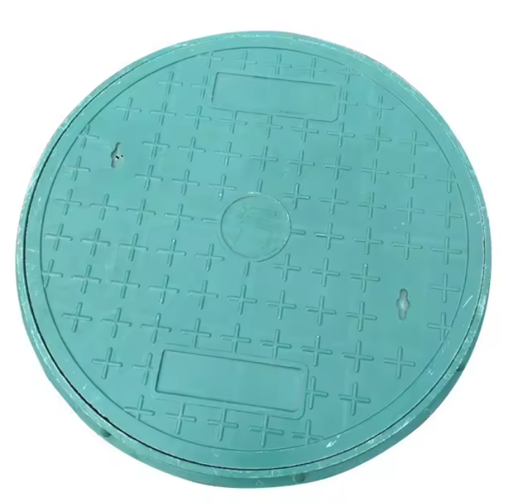
This EN124 D400 ductile iron manhole cover guide explains the key standards, material choices, applications, and purchasing factors buyers should consider before sourcing products for road and municipal infrastructure projects.
Manhole covers are often overlooked, but they play an important role in modern infrastructure. They provide safe access to underground utility networks such as water, sewage, gas, power, and telecommunications systems. At the same time, they must withstand traffic loads, outdoor exposure, corrosion risks, and repeated use over many years.
For roads, municipal drainage systems, commercial areas, industrial sites, and utility access points, EN124 D400 ductile iron manhole covers are widely used because they offer strong load-bearing performance, impact resistance, and long service life.
This guide explains what the EN124 D400 standard means, why ductile iron is commonly selected for heavy-duty manhole covers, and what buyers should check before placing an order. It is written for municipal procurement teams, contractors, utility companies, engineers, and importers who need reliable covers for infrastructure projects.

1. What Is the EN124 Standard, and Why Does It Matter?
EN124 is a European standard for manhole covers, gully tops, and access covers used in areas where pedestrians and vehicles may pass. It is widely referenced in infrastructure and municipal projects, not only in Europe but also in many international markets.
The standard defines several load classes according to where the cover will be installed. These classes help buyers, engineers, and contractors select the correct product for different application areas.
Common EN124 load classes include:
- A15 – pedestrian areas and light-duty applications
- B125 – sidewalks, pedestrian zones, and light vehicle areas
- C250 – kerbside areas and some parking applications
- D400 – roads, main traffic areas, and heavy-duty vehicle zones
- E600 – industrial areas, ports, and heavy wheel-load zones
- F900 – airports and extreme heavy-duty applications
For many road, drainage, and municipal projects, D400 is one of the most commonly specified load classes. A D400-rated manhole cover is designed for areas exposed to regular vehicle traffic, including heavy commercial vehicles.
When sourcing D400 manhole covers, buyers should not rely only on the marking on the cover. It is important to check whether the supplier can provide relevant test reports, material information, and quality documentation. A product marked “D400” should meet the performance requirements expected for that load class.
Using a non-compliant or poorly manufactured cover can lead to safety risks, early failure, cover movement, excessive noise, and higher long-term maintenance costs. For infrastructure projects, proper compliance and quality verification should always come before price comparison.
2. Why Ductile Iron Is Commonly Used for D400 Manhole Covers
Manhole covers can be made from different materials, including gray cast iron, ductile iron, steel, concrete, composite materials, and plastics. For D400 heavy-duty applications, ductile iron is widely used because it offers a strong balance of strength, durability, impact resistance, and cost effectiveness.
Ductile iron, also known as nodular cast iron, has a different internal structure from traditional gray cast iron. During production, the graphite in the iron forms nodules rather than flakes. This gives ductile iron better tensile strength, toughness, and resistance to cracking under repeated traffic loads.
For road and municipal applications, this difference matters. A manhole cover may be exposed to repeated impact from cars, trucks, buses, and construction vehicles. It must remain stable, resist deformation, and continue performing safely over time.
Compared with other materials, ductile iron offers several practical advantages:
Ductile Iron vs. Gray Cast Iron
Gray cast iron is more brittle and more likely to crack under impact or repeated loading. It can be suitable for some light-duty products, but it is not ideal for demanding D400 applications where toughness and safety are important.
Ductile Iron vs. Composite Materials
Composite covers can offer corrosion resistance and lower theft risk. However, for heavy-duty D400 applications, high-quality composite covers are often more expensive, and long-term performance under repeated heavy traffic should be evaluated carefully.
Ductile Iron vs. Steel
Steel has high strength, but it can be more vulnerable to corrosion if the surface protection is damaged. Steel covers may also create more noise under traffic and may require more frequent maintenance in outdoor environments.
Ductile Iron vs. Concrete
Concrete covers are usually low-cost, but they are heavy, difficult to handle, and more prone to cracking under impact. They are not usually the preferred option for high-performance road applications.
Ductile Iron vs. Plastic or PVC
Plastic materials are generally suitable only for light-duty or pedestrian applications. They are not designed for the load requirements of D400 traffic areas.
For these reasons, ductile iron remains a proven and practical material for D400 manhole covers used in road drainage, utility access, municipal engineering, and heavy-duty infrastructure projects.
3. Key Features of EN124 D400 Ductile Iron Manhole Covers
Choosing the right manhole cover requires more than selecting the correct load class. Buyers should also review the material, structure, surface treatment, dimensions, safety features, and customization options.
3.1 Material Grade and Casting Quality
The performance of a D400 manhole cover starts with the quality of the ductile iron. Many heavy-duty ductile iron covers are produced using grades such as EN-GJS-500-7 or equivalent materials, depending on the project specification and local standards.
When evaluating a supplier, buyers may request material test reports showing chemical composition, mechanical properties, and production quality. Good casting quality helps reduce risks such as porosity, shrinkage, uneven wall thickness, and structural weakness.
A reliable manufacturer should have clear quality control procedures for raw material inspection, casting, machining, coating, and final product testing.
3.2 Structural Design
EN124 D400 ductile iron manhole covers are available in different structures, including lift-off covers and hinged covers.
Hinged manhole covers are often preferred for municipal and utility applications because they help reduce the risk of cover loss and make maintenance access safer and easier. The hinged design also helps prevent the cover from falling into the chamber during inspection or maintenance.
A well-designed D400 cover should also include:
- Reinforced ribs on the underside for strength and load distribution
- A stable cover-and-frame fit to reduce rocking and rattling
- Anti-slip surface patterns for safer pedestrian and vehicle use
- Anti-jump or locking options where required
- Clear product markings such as load class, standard, material, or logo
Poorly designed covers may move under traffic, create noise, wear quickly, or fail to meet project requirements.
3.3 Surface Treatment and Corrosion Protection
Ductile iron manhole covers are used outdoors and may be exposed to rain, road salt, wastewater, industrial chemicals, and changing temperatures. Surface treatment helps protect the product and extend service life.
Common surface treatments include:
Bituminous Coating
Bituminous paint is a common and cost-effective surface treatment for general municipal and road applications. It provides basic corrosion protection and is widely used for standard ductile iron covers.
Epoxy Coating
Epoxy coating offers stronger resistance to corrosion, chemicals, and abrasion. It may be preferred for coastal areas, industrial sites, sewage systems, or environments where corrosion risk is higher.
Other Protective Options
For demanding projects, additional treatments such as zinc-rich primer, fusion-bonded epoxy, or customized coatings may be considered based on environmental conditions and service-life expectations.
The best surface treatment depends on the installation environment, project budget, and maintenance requirements.
3.4 Dimensions and Customization
Ductile iron manhole covers are available in various shapes and sizes. Circular covers are commonly used in municipal applications because they cannot fall through their frames. Square and rectangular covers are also used for specific utility and drainage applications.
Common customization options include:
- Custom dimensions
- Custom logo or markings
- Different surface patterns
- Locking systems
- Hinged or lift-off design
- Ventilation holes or drainage holes
- Special coating requirements
- Packaging and marking for export projects
For project-based purchasing, buyers should provide drawings, load class requirements, installation conditions, and any local compliance needs before production.
4. Common Applications for EN124 D400 Ductile Iron Manhole Covers
EN124 D400 ductile iron manhole covers are designed for areas where vehicles, including heavy commercial vehicles, may pass regularly. Typical applications include:
Urban Roads and Main Streets
D400 covers are widely used on urban roads, where they must withstand daily traffic from cars, buses, service vehicles, and delivery trucks.
Highways and Main Traffic Routes
For road and highway applications, D400 covers may be used in vehicle traffic areas where repeated heavy loads are expected. Project specifications should always be checked before selection.
Commercial and Industrial Areas
Shopping centers, logistics parks, warehouses, factories, and industrial sites often require durable covers that can handle delivery trucks, forklifts, and service vehicles.
Municipal Drainage and Sewage Systems
D400 manhole covers are commonly used in stormwater networks, sewage systems, inspection chambers, and municipal utility access points.
Utility Networks
Underground gas, power, water, and telecommunications systems often require access covers in vehicle-accessible areas. A properly selected cover helps protect both the utility network and road users.
Ports, Service Roads, and Heavy-Duty Infrastructure Areas
Some port yards, industrial service roads, and heavy-use areas may require D400 or higher load classes depending on vehicle type, load conditions, and engineering requirements.
D400 should not automatically be used everywhere. For pedestrian-only zones or light-duty landscaped areas, lower load classes may be more cost-effective. For extreme heavy-duty areas, E600 or F900 may be required.
5. Buyer’s Checklist for EN124 D400 Ductile Iron Manhole Covers
When purchasing D400 ductile iron manhole covers, price is only one part of the decision. Buyers should evaluate compliance, material quality, design, surface treatment, supplier capability, and long-term cost.
5.1 Check EN124 Compliance and Test Reports
Before placing an order, ask the supplier to provide relevant test reports or quality documents. For regulated markets or large infrastructure projects, third-party testing from recognized laboratories may be required.
Useful documents may include:
- EN124 load test report
- Material test report
- Product drawings
- Quality inspection report
- CE or other compliance documents where applicable
- ISO 9001 certificate from the manufacturer
A supplier should be able to explain what has been tested and which standard the product is designed to meet.
5.2 Review Material Quality
Ask for the ductile iron grade and confirm whether it meets the required specification. Good material quality reduces the risk of cracking, deformation, and premature failure.
Buyers should also check whether the manufacturer controls casting defects such as shrinkage, porosity, sand inclusion, and uneven thickness.
5.3 Evaluate Structural Design
A good D400 manhole cover should have a strong structure, stable fit, and practical safety features. For hinged products, the hinge should be robust and suitable for repeated opening and closing.
Key points to check include:
- Reinforced underside ribs
- Stable frame and cover contact surface
- Anti-slip surface
- Anti-theft or locking option if required
- Easy opening and maintenance access
- Clear markings on the cover
5.4 Match Surface Treatment to the Environment
General road projects may use bituminous coating, while coastal, sewage, or industrial environments may require better corrosion protection.
Before ordering, confirm:
- Coating type
- Coating thickness if specified
- Corrosion resistance requirements
- Whether special coating is needed for the project environment
5.5 Evaluate Supplier Experience
The supplier’s experience matters, especially for export and infrastructure projects. A reliable supplier should understand product specifications, packaging, documentation, loading, and shipping requirements.
Buyers should consider:
- Years of experience in ductile iron casting products
- Export experience
- Production capacity
- Quality control process
- Ability to support custom drawings
- Communication speed and technical support
- Project references where available
5.6 Consider Total Cost of Ownership
The lowest price is not always the best value. A low-cost cover that fails early can create replacement costs, safety risks, traffic disruption, and maintenance expenses.
A properly designed and manufactured D400 ductile iron manhole cover can provide long-term service with relatively low maintenance when installed correctly. For infrastructure projects, buyers should consider total cost over the product’s service life, not only the initial purchase price.
5.7 Confirm Export Documentation and Logistics
For international buyers, documentation and shipping support are important. Before ordering, confirm that the supplier can provide:
- Commercial invoice
- Packing list
- Certificate of origin if required
- Product test reports
- Compliance documents
- Shipping marks and packaging details
- Export-ready packaging suitable for sea freight
Good logistics preparation helps reduce customs delays, product damage, and communication problems during shipment.
6. Common Mistakes to Avoid When Buying D400 Manhole Covers
6.1 Relying Only on the D400 Marking
A D400 marking on the cover is not enough. Buyers should request test reports and product documentation to confirm whether the cover is designed and tested for the required application.
6.2 Choosing the Wrong Material
Gray cast iron may be cheaper, but it is more brittle and less suitable for heavy-duty D400 applications. For roads and heavy traffic areas, ductile iron is generally the safer and more reliable option.
6.3 Ignoring Product Weight and Wall Thickness
Some low-cost products reduce weight by using thinner sections. This can reduce strength and long-term performance. Buyers should request drawings, dimensions, and weight information, and check whether the delivered product matches the agreed specification.
6.4 Overlooking Safety Features
Anti-slip patterns, stable fitting, locking systems, and anti-jump designs may be important depending on the installation area. Removing these features to reduce cost can create long-term safety and maintenance problems.
6.5 Using the Wrong Load Class
Using a lower load class in a heavy-traffic area can create safety risks. Using a higher class than necessary can increase cost without added value. The load class should match the actual installation environment.
6.6 Not Confirming Import Requirements
Different markets may require different documents. Buyers should confirm customs, compliance, and project documentation requirements before placing the order.
Installation and Maintenance Best Practices
Even a high-quality manhole cover can fail early if it is installed incorrectly. Correct installation and regular maintenance are essential for long service life.
7.1 Installation Best Practices
Prepare a Stable Foundation
The frame should be installed on a flat, level, and structurally sound base. The foundation must support the frame evenly to prevent cracking, rocking, or deformation under traffic.
Keep the Cover Flush with the Road Surface
The cover should be level with the surrounding road surface. Height differences can increase impact stress from passing vehicles, causing noise, wear, and early damage.
Secure the Frame Properly
The frame should be fully supported and secured according to project requirements. Concrete or bedding materials should be properly cured before the road is opened to traffic.
Check the Fit Before Opening to Traffic
Before final use, check whether the cover sits correctly in the frame, opens and closes smoothly, and does not rock or rattle.
Install Seals or Gaskets Correctly
Where seals or gaskets are used, they should be installed properly to reduce noise, water ingress, and odour escape.
7.2 Maintenance Best Practices
Inspect Regularly
Regular inspections can help identify cracks, corrosion, loose hinges, damaged locks, or movement before they become serious problems.
Keep the Frame Clean
Remove stones, debris, soil, and other materials from the frame and contact surface. Debris can prevent the cover from sitting correctly and may cause rocking or uneven load distribution.
Maintain Hinges and Locks
For hinged or locked covers, moving parts should be checked and lubricated when necessary to ensure safe and easy operation.
Repair Coating Damage
If the coating is scratched or damaged, touch-up coating may help reduce corrosion risk.
Replace Damaged Covers Promptly
If a cover or frame shows serious cracking, deformation, or structural damage, it should be replaced rather than repaired for continued heavy-duty use.
8. Frequently Asked Questions About EN124 D400 Ductile Iron Manhole Covers
Q1: What does D400 mean for manhole covers?
D400 is a load class defined by the EN124 standard. It is commonly used for manhole covers installed in roads, traffic areas, and other locations exposed to heavy vehicle loads.
Q2: What is the difference between D400 and other EN124 load classes?
EN124 load classes are designed for different application areas. A15 is for pedestrian areas, B125 and C250 are used for lighter-duty areas, D400 is commonly used for roads and heavy traffic areas, while E600 and F900 are used for more demanding industrial, port, or airport applications.
Q3: Why is ductile iron preferred for D400 manhole covers?
Ductile iron offers strong load-bearing performance, impact resistance, and durability. It is less brittle than gray cast iron and is widely used in road and municipal infrastructure applications.
Q4: Are hinged manhole covers better than lift-off covers?
For many municipal and utility applications, hinged covers offer practical advantages. They can improve safety during maintenance, reduce the risk of cover loss, and make access easier for utility crews. Lift-off covers may still be suitable for some applications depending on project requirements.
Q5: How can I confirm whether a cover is truly EN124 D400 compliant?
Ask the supplier for product drawings, material information, and relevant load test reports. For large projects, buyers may also request third-party inspection or testing before shipment.
Q6: Can D400 manhole covers be used on highways?
D400 covers are commonly specified for roads and heavy traffic areas. For highways or special road applications, the final selection should follow the project specification and local engineering requirements.
Q7: Can ductile iron manhole covers be customized?
Yes. Many manufacturers can provide custom sizes, logos, surface patterns, locking systems, coatings, and packaging based on project requirements and drawings.
Conclusion
EN124 D400 ductile iron manhole covers are widely used in roads, municipal drainage systems, utility networks, and other heavy-duty infrastructure projects. Their strength, impact resistance, and long service life make them a practical choice for applications where safety and durability are important.
For buyers, the key is not only to compare prices, but also to verify EN124 compliance, material quality, load test reports, surface treatment, structural design, and supplier experience. Choosing the right product can help reduce maintenance costs, improve safety, and support long-term project performance.
Hongke supplies ductile iron manhole covers, gully gratings, drainage covers, and custom cast iron products for infrastructure and municipal projects. Contact us to discuss your project requirements, drawings, load class, and customization needs.
Choosing the right D400 Ductile Iron Manhole Cover is essential for project safety.

