A D400 manhole cover installed on a quiet pedestrian footpath. A C250 cover placed in the middle of a busy carriageway. Both mistakes happen more often than they should, and both can create problems after the project is finished.
In the first case, the buyer may pay for unnecessary weight, handling cost and international freight. In the second case, the risk is more serious: cover movement, frame damage, cracking, noise complaints, emergency replacement and possible safety issues on site.
This is why the question of C250 vs D400 manhole cover selection should not be treated as a simple price comparison. Under the EN124 load class system, manhole covers and access covers are tested and grouped by load performance, from A15 to F900. For many road, drainage and municipal projects, C250 and D400 are the two classes buyers most often compare, and sometimes confuse.
For technical background, buyers can also refer to the BS EN 124:2015 update from BSI, which covers gully tops and manhole tops for vehicular and pedestrian areas.
This guide explains how a C250 manhole cover differs from a D400 manhole cover, where each one should be used, and how to choose the right manhole cover load class before placing an order.
What Is a C250 Manhole Cover?
A C250 manhole cover is designed for medium-duty areas under the EN124 system. Its test load is 250 kN, commonly understood as approximately 25 tonnes. In practical terms, C250 is suitable for locations where vehicles may pass nearby, but where the cover is not exposed to constant heavy wheel loads in an open traffic lane.
The most common C250 manhole cover application is kerbside drainage. This includes areas close to the road edge, such as channels near the kerb, light-duty parking areas, residential access roads and commercial car parks where the main traffic is cars or light vans.
C250 can be a sensible choice when the site conditions are controlled. It is usually lighter than D400, easier to handle, and more cost-effective for the right application. The problem starts when C250 is used in a place where the real traffic condition is heavier than the buyer originally assumed.
- Kerbside drainage channels
- Light vehicle car parks
- Residential low-speed roads
- Pedestrian areas with occasional light vehicles
- Office building or commercial parking areas
Engineer’s note: A C250 cover should not be selected only because heavy vehicles “rarely” pass through the area.
Even occasional heavy vehicle movement can create dynamic impact load, especially when vehicles pass at speed or brake near the cover. Over time, this can lead to unstable seating, micro-cracks, frame wear or sudden damage.
So the real question is not only “What vehicles normally pass here?” It is also “What is the heaviest vehicle that may reasonably pass here during the product’s service life?”
What Is a D400 Manhole Cover?
A D400 manhole cover is designed for heavier traffic conditions. The D400 manhole cover load capacity is 400 kN, which is commonly described as approximately 40 tonnes of test load under EN124 classification.
D400 is normally used for carriageways, public roads, highway shoulders, industrial sites, logistics areas, gas stations and other locations where heavy vehicles may pass regularly. Compared with C250, a D400 cover usually has a stronger cover structure, deeper frame, wider seating area and better resistance to repeated traffic impact. For heavy-duty road applications, D400 covers are commonly produced from high-grade ductile iron, such as GJS500-7 or equivalent material grades, depending on project requirements.
For projects that require a heavy-duty road access product, buyers can also review our D400 ductile iron manhole cover for road drainage, carriageways and municipal utility access applications.
This material choice matters because ductile iron provides better toughness, tensile strength and impact resistance than grey cast iron. In road traffic areas, the cover is not only carrying static load. It also needs to handle vibration, wheel impact, braking force and long-term outdoor service conditions.

For road projects, the frame is just as important as the cover. A heavy-duty cover sitting in a weak or shallow frame can still move, rock or make noise. That is why many D400 designs use deeper frames, anti-rocking seats, locking systems or double-triangular non-rock structures.
- Main roads and carriageways
- Highway shoulders
- Industrial estates and logistics yards
- Loading bays and truck access roads
- Gas stations and service areas
- Bus depots and municipal access roads
Engineer’s note: D400 is not automatically the best choice for every location.
For pure pedestrian areas, gardens, landscape zones or fully restricted light-duty spaces, D400 can be overkill. It adds weight, material cost and freight cost without bringing real value to the project.
In other words, D400 is the safer choice when road traffic is involved. But it should still be selected based on the actual installation environment, not just because it sounds stronger.
C250 vs D400 Manhole Cover: Key Differences
The table below gives a practical comparison of C250 vs D400 manhole cover specifications from a buyer’s point of view.
| Feature | Class C250 | Class D400 |
|---|---|---|
| Load Capacity | 250 kN, approx. 25 tonnes | 400 kN, approx. 40 tonnes |
| EN124 Class | Class 3 | Class 4 |
| Typical Use | Kerbsides, car parks, pavements, light traffic areas | Carriageways, roads, highways, industrial traffic areas |
| Typical Weight | Lighter and easier to handle | Heavier and may require mechanical lifting |
| Frame Design | Standard frame profile | Deeper reinforced frame with wider seating area |
| Common Forms | Round, square, recessed paving-top designs | Round, square, double-triangular non-rock designs |
| Relative Cost | Lower material and freight cost | Higher material and freight cost |
One detail buyers often miss is the rocking problem. In heavy traffic areas, even a small gap between the cover and frame can create repeated movement. That movement causes noise, wear and impact damage. This is why D400 covers for roads often use stronger seating designs or double-triangular structures to reduce rocking under traffic.
For overseas orders, the weight difference also matters. D400 covers can increase pallet weight, container loading weight and handling requirements. That cost is justified when the site needs D400, but it becomes wasteful when the location only requires C250.
How to Choose the Right Load Class for Your Project
The safest way to choose between C250 and D400 is to look at the installation location, expected vehicle type and worst-case traffic condition. Do not only look at the normal daily traffic. Look at what may happen over the full service life of the project.
Choose C250 if:
- The area is a car park, pedestrian zone or controlled light vehicle area.
- The cover is installed near kerbside drainage, not in a main traffic lane.
- Heavy goods vehicles, buses and fire engines are not expected to pass over it.
- The project specification allows EN124 C250 for that location.
- The buyer wants a cost-effective solution for medium-duty use.
Choose D400 if:
- The cover is installed on or near an open public road.
- Heavy trucks, buses or commercial vehicles pass regularly.
- Heavy vehicles may pass unexpectedly during maintenance or emergency access.
- The site is a loading bay, logistics yard, gas station, industrial road or highway shoulder.
- The official project specification requires EN124 D400 compliance.
Here is a common real-world example. A private residential parking area may normally only be used by small cars. From that point of view, C250 may look suitable. But if the same route is also used by fire engines, waste collection trucks or service vehicles, the load risk changes completely.
A fire engine or refuse truck can easily create loading conditions beyond what a light-duty parking area normally sees. If the cover is located on a fire access route or main entrance, D400 is often the safer specification, even if heavy vehicles are not present every day.
Field question: What is the heaviest vehicle that could pass over this cover during the next 10 to 20 years?
If the answer includes fire engines, buses, tankers, heavy trucks, forklifts or industrial vehicles, choosing D400 is usually a safer engineering decision.
Quality and Inspection Points Before Ordering

After selecting the correct EN124 load class, buyers should still check product details carefully. A cover marked C250 or D400 must also match the project drawing, frame design and installation condition.
Before placing an order, confirm the following:
- Clear opening size
- Overall frame size
- Total depth
- Frame seating area
- Cover and frame fit
- Anti-slip surface pattern
- Locking or hinge requirement
- EN124 marking and load class
- Material grade, such as GJS500-7 or equivalent ductile iron where required
- Export packaging method
For international buyers, packaging should not be treated as an afterthought. D400 covers are heavier, so pallet strength, stacking method, stretch film, packing straps and container loading arrangement should be reviewed before shipment. Buyers can also check the supplier’s quality control process before confirming a bulk order.
Conclusion: C250 or D400?
The right choice is not always the strongest cover. It is the cover that matches the site condition, traffic risk and project specification.
Choose C250 for controlled light traffic areas, kerbside drainage, pavements, residential roads and car parks where heavy vehicles are restricted. Choose D400 for carriageways, public roads, highway shoulders, industrial sites, gas stations, loading bays and any location where heavy vehicles may pass regularly or unexpectedly.
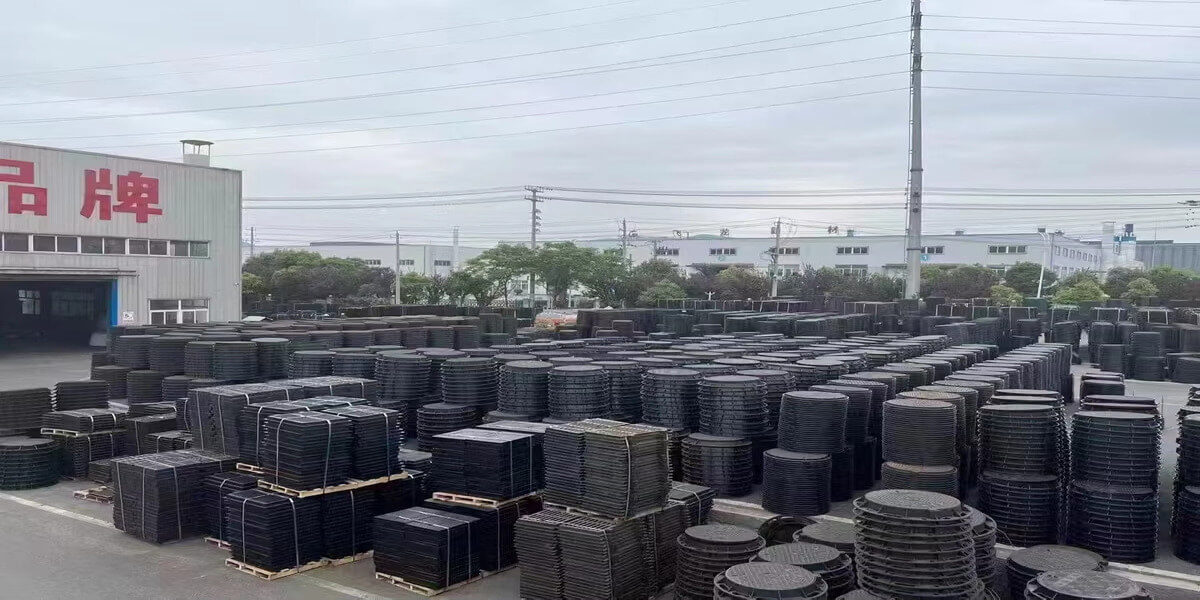
Hongke Global supplies C250 ductile iron manhole covers, D400 manhole covers with frame, gully gratings, drainage covers and custom casting products for road, drainage, municipal and infrastructure projects.
For more technical background, buyers can also read our EN124 manhole cover load classes guide and detailed D400 manhole cover guide.
If you are not sure which load class is suitable for your project, send us your drawing, clear opening size, expected vehicle load, installation location and destination port. Our team can help review the basic specification and provide a suitable quotation.
Contact our team to discuss your project requirements.
FAQ
What is the main difference between C250 and D400 manhole covers?
The main difference is load capacity and installation area. C250 covers are tested to 250 kN and are normally used for kerbsides, car parks and medium-duty areas. D400 covers are tested to 400 kN and are designed for roads, carriageways, highways and heavy traffic areas.
In practice, the decision should not be based only on the load number. Buyers should also consider vehicle speed, traffic frequency, frame stability, installation location and the heaviest vehicle that may pass over the cover during its service life.
Can a C250 manhole cover be used on a road?
A C250 manhole cover can be used near kerbside drainage or controlled light traffic areas, but it should not be used in open carriageways where heavy vehicles may pass. For public road lanes, D400 is usually the safer choice.
Even if heavy trucks pass only occasionally, dynamic wheel impact can be much higher than a simple static load. This is why C250 should not be selected for roads where buses, fire engines, refuse trucks or heavy goods vehicles may pass.
What is the D400 manhole cover load capacity?
The D400 manhole cover load capacity is 400 kN, commonly described as approximately 40 tonnes of test load under EN124 classification.
This test load helps confirm that the cover is suitable for demanding traffic environments, including repeated wheel loads, vibration, braking force and long-term outdoor service. For this reason, D400 is commonly used in carriageways, industrial roads, gas stations, loading bays and municipal road access points.
Is D400 always better than C250?
No. D400 is stronger, but it is not always more cost-effective. For pedestrian areas, gardens or controlled light-duty locations, C250 may be more suitable and easier to handle.
Using D400 in a location that only requires C250 may increase material cost, product weight, handling difficulty and international freight cost. The best choice is the load class that matches the real installation environment.
How should buyers choose the right EN124 load class?
Buyers should check the installation location, expected traffic, maximum possible vehicle load, official project specification and long-term maintenance risk before choosing the load class.
A useful engineering question is: what is the heaviest vehicle that may reasonably pass over this cover during the next 10 to 20 years? If the answer includes fire engines, buses, tankers, forklifts or heavy trucks, D400 is usually the safer specification.

