 MANHOLE COVERS
Are Composite Manhole Covers and Frames Safer Than Iron Ones?
Composite covers and ductile iron covers solve different access-cover problems. A composite cover can be useful where electrical insulation, lower manual-handling weight or reduced scrap value is important. A ductile iron cover is usually the stronger starting point where the installed cover must carry repeated road traffic and work with a matching frame.
Start with the installed load and location
The first decision is not the cover material. It is the application: pedestrian paving, a landscaped area, a car park, a kerbside inlet or a traffic lane. Confirm the required load class, clear opening, frame outside size, cover-and-frame fit, bedding detail and surface level before selecting a material. A cover that is suitable for a footpath is not automatically suitable for a road lane.
Where composite covers can be appropriate
Composite systems are often considered for pedestrian routes, utility chambers, landscaped sites and locations where a non-metallic surface is requested. Their lower theft value and lighter handling can be practical advantages. The supplier should still provide the actual load rating, frame configuration, slip-resistance details and installation guidance for the specified product.
Where ductile iron is usually the practical choice
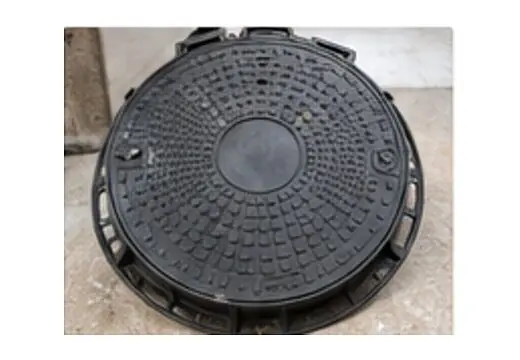
For municipal roads, heavy traffic areas and drainage applications, ductile iron remains a common engineered choice. It can be supplied with a matching frame, anti-theft or locking details, sealed interfaces and project-specific dimensions. For road projects, buyers should ask for the applicable EN 124 load class, dimensions and the proposed cover-frame assembly rather than accepting a generic “heavy duty” description.
Compare the complete system, not just the lid
- Load requirement: confirm the specified class and the actual traffic location.
- Frame fit: verify the clear opening, outside frame size, bearing depth and installation drawing.
- Service conditions: consider water, corrosion exposure, odour control, opening frequency and theft risk.
- Site handling: plan for safe lifting and access during maintenance.
- Documentation: request a drawing, material statement and inspection information appropriate to the order.
How to specify a cover for an RFQ
A useful RFQ states the load class, clear opening, frame dimensions, application, quantity, required surface finish and any logo, locking, hinge or sealing requirement. If a drawing is available, send it with the inquiry. This lets the supplier check cover-frame fit before production instead of making assumptions from a photo or a generic size.
Conclusion
Composite covers are not universally safer, and iron covers are not universally better. The correct choice depends on the required load, installation and service environment. For road and municipal projects, start from the load class and the complete cover-frame system; then choose the material and options that match the project.
For related selection guidance, see our manhole cover load class guide and ductile iron manhole cover range.
Are composite manhole covers always safer than iron covers?
Not automatically. Safety depends on the required load class, product design, installation, slip resistance, fire and project requirements, not material alone.
What safety advantages can composite covers offer?
Depending on their design, composite covers can offer low electrical conductivity, corrosion resistance and lower handling weight. These benefits must be verified against the project specification.